Image of Stockholm

A guide to
STOCKHOLM

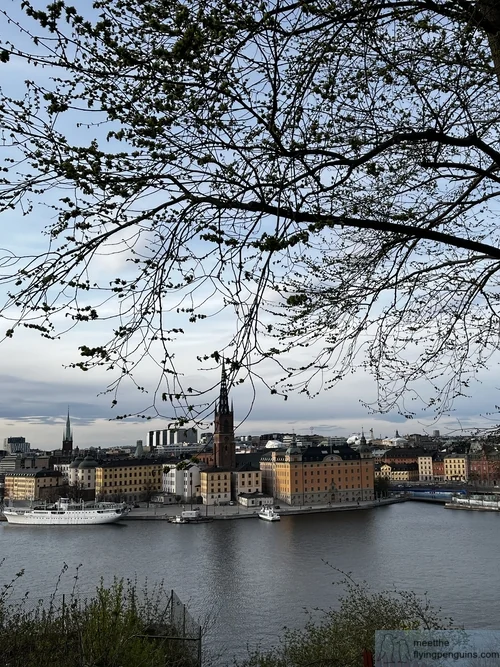
Stockholm, the crown jewel of Sweden, might be one of Europe's most underrated destinations. Built on 14 islands connected by over 50 bridges, the Swedish capital is full of colorful buildings, waterfront views at every corner and a plethora of viewpoints to enjoy the view of the city from above. What makes Stockholm truly special though, is how the experience differs depending on the season you visit it - from the long summer days, exploring the islands and outdoor activities, to cozy winter evenings on snowy streets and Christmas markets, to spring cherry blossom, and autumn golden shades on tree leaves.

#sweden 🇸🇪 #europe

Table Of Contents

But there's one experience you can enjoy no matter the season - and it lies underground. Stockholm's metro system. Let's start our journey there!

Where to go

🔗

1. Metro Art

🔗
Stockholm's metro is often called the world's longest art gallery, and for good reason. The majority of the stations feature colorful murals, sculptures, and artistic decorations that turn everyday commutes into something unexpected. Here are some of the stations worth exploring:

Kungstradgarden

🔗
The end of the Blue Line and probably the most eye-catching station in the network. Heading down the escalators, you'll notice a piano keyboard painted across the ceiling above you. The platform itself is equally surprising: colorful patterns cover the walls and ceiling, the floor has a checked tile design, and along the walkway you'll find columns and statues laid out like an archaeological excavation site.

Stadion

🔗
Named after the nearby 1912 Olympic Stadium, this station is hard to forget. A large rainbow stretches across the cave ceiling, standing out vividly against the raw, exposed bedrock walls. It's one of those stations where you instinctively reach for your camera.

Stadshagen

🔗
A sports-themed station, named after the sports center above. The walls feature colorful illustrations of various sports painted on buckled aluminum panels, from soccer and athletics to ice hockey and swimming. The fun part is that the motifs change depending on the angle you look at them, and the platform transitions from summer sports on one end to winter sports on the other.

Solna Centrum

🔗
Deep red and green walls carved into the bedrock make this station feel like stepping into a painted cavern. The artwork tells a story about the tension between urbanization and nature, with the red representing the expanding city consuming the green countryside. Somewhere along the way you'll spot a hunter and an elk, one of the many small details worth looking out for.

Radhuset

🔗
A different approach entirely: the natural bedrock is left exposed, painted in warm reddish-brown tones that stand out against the blue metro trains passing through. The station has the feel of a sunken world. If you look up, you might spot a pair of colorful galoshes hanging from the ceiling.

Tekniska hogskolan

🔗
Right next to the Royal Institute of Technology, so it's no surprise the station has a science theme. A dodecahedron hangs from the cave ceiling, representing the classical elements (fire, air, water, and earth), while geometric shapes and scientific references are carved into the walls throughout.
Kungstradgarden metro station colorful patterns and statues
Kungstradgarden metro station platform with checked tiles
Stadion metro station with rainbow across the cave ceiling
Stadshagen metro station with colorful sports illustrations
Solna Centrum metro station painted cavern
Solna Centrum metro station hunter and elk detail
Solna Centrum metro station bedrock artwork
Radhuset metro station with exposed bedrock and warm tones
The dodecahedron at Tekniska hogskolan metro station
T-Centralen metro station blue and white artwork
T-Centralen metro station platform art

The lines

🔗
The Stockholm metro consists of three main lines, each color-coded. The Blue line (numbers 10 and 11) runs through the northwest, the Red line (numbers 13 and 14) connects the south to the northeast, and the Green line (numbers 17, 18, and 19) covers the west and south. All three lines converge at T-Centralen, the central station in Norrmalm, making it the central hub of the network and the point where almost every journey begins or changes.

2. A day in Södermalm

🔗
Now that we've learned our way around the metro, it's time to explore one of the major characteristics of the city: the islands. Stockholm is built across many islands, the first being Gamla Stan, which literally translates to "old city" in Swedish. It's a very touristy place indeed and you can certainly spend time there, but we'll instead focus on another island, equally well known: Södermalm. Once a working-class district, Söder has become the creative heart of the city, with vintage shops, waterfront bars, leafy parks, and some of the best views in Stockholm. Both the red and green lines run through Södermalm, but we'll start with the red line and get off at Hornstull station, served by lines 13 and 14, right at its western edge.

Morning: Hornstulls Marknad

🔗
Come out of the metro and head toward the water. You'll find Hornstulls Marknad stretching along the waterfront at Hornstulls strand. Running on weekends from April through October, it's part flea market, part street food festival, and part creative showcase. Food trucks line up along the water serving everything from arepas to Korean BBQ, while rows of stalls offer second-hand clothes, handmade jewelry, and vintage finds you didn't know you needed. Grab something to eat, find a spot by the water, and ease into the day with the market's laid-back energy. If you're visiting outside market season, the Hornstull area itself is still worth a wander, as there are plenty of cafés and brunch spots along Hornsgatan.

Midday: Walk the water to Monteliusvägen

🔗
From the market, head west along the waterfront. The walk takes you past small boats moored at the docks, people kayaking between the islands, and trees rising straight out of the shallows. Just across the water you can see Reimersholmen and Långholmen, two islands close enough to feel within reach. As you continue, the path runs alongside Söder Mälarstrand, the scenic strip along Södermalm's northern shore, until the cliffs of Mariaberget rise above you. That's where Monteliusvägen begins: a narrow 500-meter path carved into the cliffside of Mariaberget. Old wooden houses painted in faded reds and yellows on one side, an unobstructed panorama of Lake Mälaren, the City Hall, and Riddarholmen on the other. The view is stunning at any time of day, but to be fair, it's just a little better around golden hour.

Afternoon: Fjällgatans Kaffestuga

🔗
And if you thought we were done with the panoramic views, you couldn't be more wrong. Grab lunch at one of the many spots along the way, then head to the eastern edge of Södermalm. Our end goal is Fjällgatans Kaffestuga, and even though it's a bit of a walk to get there, it's worth every step. It's a tiny café that sits up on the cliff, but offers one of the best views in the city. Looking out, the view stretches from Gamla Stan, past the small islands of Skeppsholmen and Kastellet, all the way to Djurgården, home to Gröna Lund. Have a coffee and a cinnamon bun, what Swedes call fika, find a spot inside or out, and soak it in.

Dinner: Medborgarplatsen

🔗
Head back towards the center of Södermalm and you'll find yourself at Medborgarplatsen, the main square and the center of the neighborhood's nightlife. The square and the streets around it are packed with restaurants and bars covering every cuisine and budget you can think of, from Swedish meatballs to sushi to Neapolitan pizza. Whether you're after a casual bite or a proper sit-down dinner, you'll find something here without having to wander far. Pick whatever catches your eye, and when dinner turns into drinks, you're perfectly positioned for the last stop of the day.

Evening: Ugglan Boule & Bar

🔗
Head toward Nytorget, the leafy square a few blocks east, and look for a spiral staircase leading underground. That's Ugglan: a 1,500-square-meter recreation center disguised as a bar, and the perfect way to close out the day. Shuffleboard is the main draw, with 16 tables that make it Stockholm's largest venue for the game, but you can also play boule, darts, billiards, round ping-pong, or lose yourself in a wall of pinball machines. The walls are covered in graffiti, the music fills the room, and the kitchen serves no-nonsense street food (tacos, burgers, nachos) that hits the spot after a day of walking. It's been around since 1993 and it shows exactly zero interest in growing up.

Things to know before your visit

🔗
  1. 🐧

    What currency do they use in Stockholm?

    Swedish Krona - SEK(kr)

  2. 🐧

    What type of power outlet?

    Types C

  3. 🐧

    Is tap water drinkable

    Yes, it's drinkable

  4. 🐧

    Some words

    Tack 🔈(tack/tak/)→ Thank you
    Hej 🔈(hey/hɛj/)→ Hi / Hello
    God morgon 🔈(good mor-gon/ɡuːd ˈmɔrːɡɔn/)→ Good morning
    God kväll 🔈(good kvel/ɡuːd ˈɕvɛlː/)→ Good evening
    Ja 🔈(ya/jɑː/)→ Yes
    Nej 🔈(nay/nɛj/)→ No
    Varsågod 🔈(var-so-goad/ˌvarːsoˈɡuːd/)→ You're welcome
    Ursäkta 🔈(oor-shek-ta/ʊːˈɕɛkːta/)→ Excuse me / Sorry
Climate

🔗
Jan
-3.63°
-0.64°
Feb
-3.28°
0.17°
Mar
-1.37°
3.37°
Apr
2.58°
9.05°
May
6.74°
14.39°
Jun
10.84°
18.47°
Jul
13.55°
21.32°
Aug
13.33°
20.55°
Sep
10.09°
16.21°
Oct
5.78°
9.91°
Nov
2.37°
5.15°
Dec
-1.31°
1.66°